As renewable energy infrastructure continues to expand, managing distributed energy assets requires continuous monitoring, timely fault identification and data-driven decision-making. With solar and wind installations generating vast amounts of operational data, centralised digital intelligence has become increasingly important in ensuring efficiency and reliability.
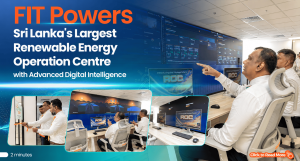
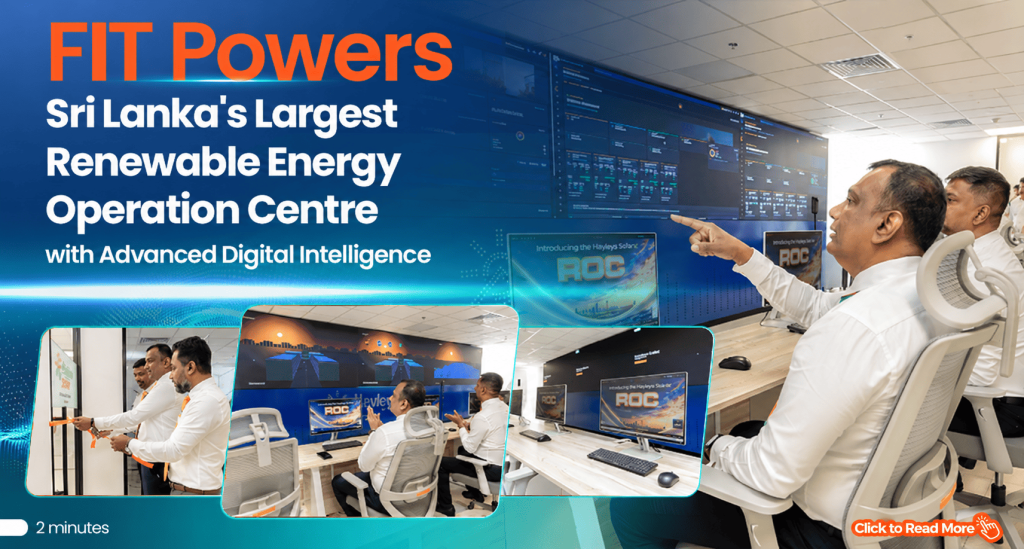
Recognising this need, Hayleys Fentons Limited has introduced a dedicated 24/7 Renewable Energy Operations Centre (ROC), designed and technologically backed by Fentons Information Technologies (FIT), the ICT arm of Hayleys Fentons Limited. The ROC integrates continuous monitoring, alarm management and performance analytics within a centralised digital platform, enabling more efficient management of renewable energy assets.
The platform supports residential solar, commercial and industrial (C&I), investment rooftop, ground-mounted solar and wind energy projects. Through a unified monitoring environment, operational teams can access real-time information on energy generation, power production, inverter and device status, weather conditions and other critical operational parameters.
A key strength of the ROC is its 24/7 monitoring capability, enabling continuous oversight of connected renewable energy assets beyond conventional working hours. Its integrated alarm management system identifies new, ongoing and resolved alarms, alongside offline devices. Advanced alarm analysis and ageing functionalities help technical teams prioritise critical issues, accelerate fault identification and facilitate timely intervention, reducing the risk of avoidable downtime.
The ROC also highlights the importance of integrating Information Technology (IT) and Operational Technology (OT) in modern renewable energy infrastructure. As solar, wind and energy storage systems become increasingly interconnected, securing the interface between digital networks and industrial control systems is critical to ensuring operational resilience. Technologies such as OT-specific Network Detection and Response (NDR), Security Information and Event Management (SIEM), Security Orchestration, Automation and Response (SOAR), and Industrial Intrusion Detection Systems (IDS) play an important role in enabling network visibility, identifying cyber threats and supporting coordinated incident response. These technologies form part of the broader cybersecurity framework for protecting distributed renewable energy assets, where Network Operations Centre (NOC) and Security Operations Centre (SOC) capabilities complement operational monitoring to strengthen system reliability and security.
Beyond operational monitoring, the ROC incorporates comprehensive performance analytics, including daily, monthly and annual generation analysis, expected-versus-actual performance comparisons, specific yield evaluation and plant-to-plant benchmarking. These capabilities transform operational data into actionable insights, supporting informed decision-making and improved asset performance.
FIT plays a central role in enabling this digital transformation, bringing together its ICT expertise and Hayleys Fentons’ renewable energy engineering capabilities. By integrating monitoring, alarm intelligence and performance analytics into a single operational environment, the ROC reduces reliance on fragmented manual processes while strengthening operational visibility and efficiency.
More than a conventional monitoring dashboard, the ROC represents a technology-driven approach to renewable energy management, where continuous visibility and data intelligence support more responsive and efficient operations.
At FIT, we believe the future of renewable energy is not only about generating clean power, but also about managing it intelligently, 24 hours a day, seven days a week.